Home Blog Page 16

The Country Mouse and the Town Mouse 1

0

Jesop (6th Century, B.C.?)

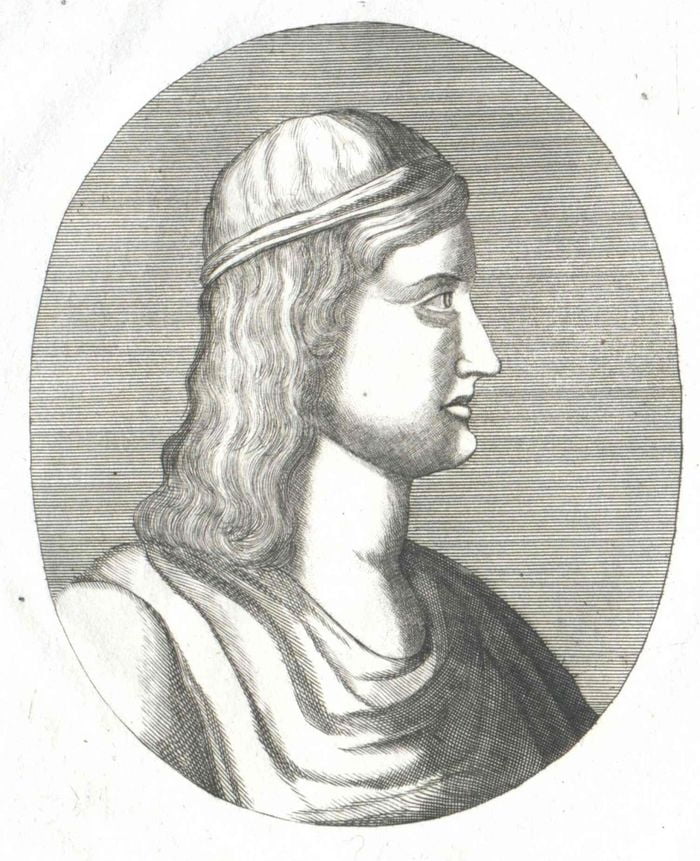
Jesop was “not a poet,” says Gilbert Murray, “but the legendary author of a particular type of story.” This type is known as the Beast Fable, a brief incident related in order to point a simple moral. According to tradition Jesop was a foreign slave of the Sixth Century B.C. Whether the fables of ancient India, such as those in the Hitopadesa, influenced the ancient Greeks and Romans is a question still debated by scholars. At any rate there is a striking similarity, both in treatment and subject-matter, between the Fables of Jesop, Phaedrus and Avianus, and those which delighted the Indians.

The present translation was made by James and published first in 1848.

The Country Mouse and the Town Mouse

Once upon a time a Country Mouse who had a friend in town invited him, for old acquaintance` sake, to pay him a visit in the country. The invitation being accepted in due form, the Country Mouse, though plain and rough and somewhat frugal in his nature opened his heart and store, in honor of hospitality and an old friend.

There was not a carefully stored-up morsel that he did not bring forth out of his larder, peas and barley, cheese-parings and nuts, hoping by quantity to make up what he feared was wanting in quality, to suit the palate of his dainty guest. The Town Mouse, condescending to pick a bit here and a bit there, while the host sat nibbling a blade of barley- straw, at length exclaimed, “How is it, my good friend, that you can endure the dullness of this unpolished life? You are living like a toad in a hole. You can`t really prefer these solitary rocks and woods to streets teeming with carriages and men. On my honor, you are wasting your time miserably here. We must make the most of life while it lasts.

The whole text can be seen on link The Country Mouse and the Town Mouse

Read More about Ski holidays Bulgaria Bansko

Eumieus` Tale 2

1

The story below has been copied from docappadocia.com. You can read the rest of the story on  Eumieus Tale.

Homer (About 1000 B.C.)

The first mention of Homer dates from the Seventh Century B.C., but when he lived, or indeed whether he ever lived at all, are questions that have never been solved. The Iliad and The Odyssey were probably composed about a thousand years before the Christian era. The short story, as we know it, was not of course a recognized literary form, but Eumtsus ` Tale, in The Odyssey, happens to be an excellent example. It is told to Odysseus by the old swine-herd.

The present version, purposely reduced by the editors to more or less colloquial prose, is based upon three translations. There is no title in the original.

Eumieus` Tale

There is an island over beyond Ortygia—perchance thou hast -L heard tell of it—where the sun turns. It is a goodly island, though not very vast, with rich herds and flocks, and much grain and wine. There is no dearth, and no illness visits poor mortals. When men grow old there, Apollo of the Silverow, in company with Artemis, comes to them and kills them gendy with his shafts. On the island are two cities, which divide all the land between them. My father was king over all, Ctesius son of Ormenus, a godlike man.

“To this land came the Phoenicians, famous sailors greedy for mer-chandise, bringing many things in their dark ship. There was in my father`s palace a Phoenician woman, tall and lovely, and skilful in making beautiful things with her hands; her the Phoenicians deceived by their guile. As she was washing clothes near the hollow ship, one of them conquered her; love beguiles many women, even the noblest. The Phoenician asked her who she was and from what land, and she straight-way showed him the high palace of my father, and said, `I come from Sidon, rich in bronze, and am the daughter of the wealthy Arybas. The Taphians, who are pirates, seized me as I was coming from the fields, brought me to this land, and sold me for a great price to my present master.` Then he who had conquered her said in answer, `Wouldst thou return once more to thy home with us, to see again the high palace of thy father, and see thy mother? They are yet alive, and are reputed to be wealthy.`

“Then the woman made answer to him and said, `This may be, if you sailors will swear to bring me home safely.` Thus she answered, and the sailors swore as she bade them, and after they had sworn, the woman spake to them: `Say naught now; let none of you speak to me when you see me in the street, or even by the well, lest it be known and told to the old man here, and he suspect me and tie me fast and bring death to you all. But keep in mind the plan, and hasten to bring your freight for the homeward voyage. When your ship is full laden, send a messenger quickly to the palace for me, and I will bring gold, all I can lay hand upon. And there is more, besides, that I would bring with me: I am nursing a child for my master, a darling boy who runs about with me; I would bring him with me on the ship. He should bring a high price, if you sell him among men of other lands and other speech.`

“Then she departed to the fair halls. But the sailors remained among us a whole year, and gathered great wealth for their hollow ship, and when it was laden and ready to sail, a messenger was sent to tell the woman. A crafty man with a golden and amber chain came to the halls of my father. My mother and the maidens in the palace were looking upon the chain and holding it, offering the man a price for it, while he made signs in silence to the woman. Then he betook himself to the hollow ship. The woman then took me by the hand and led me out of the house. At the doorway she found the cups and tables of the guests who had feasted and waited upon my father: they had gone out to the meeting-place where councils were held.

And the woman concealed three cups in her bosom, and carried them away, while I followed her innocently. The sun sank and darkness came. Going quickly, we reached the harbor and the swift ship of the Phoenicians; the sailors went aboard, taking us with them, and sailed over the ocean, Zeus giving us favoring winds. We sailed continuously day and night for six days, but when Zeus, son of Cronos, brought the seventh, Artemis the huntress struck down the woman and she fell like a swallow to the bottom of the ship. The sailors threw her overboard, to the seals and the fishes, and I sorrowed. With the help of wind and wave they came to Ithaca, where Laertes bought me. It was thus that I first beheld this place.”

Read More about The Mummy`s Foot part 3

Zheravna Festival

0

Private tours Bulgaria. Bulgaria is no different from any other country in the world. It has its own history, heroes, legends. It surely had its falls and pinnacle. Bulgaria is inviting you on private tours Bulgaria to learn more about the country.

The country had difficult moments but it has always had its folklore. That folklore full of never ending energy which helped Bulgarians to survive through the centuries of wars. It also helped them to stay as a nation. What does folklore mean? It is the beliefs, traditions, stories of a community which are passed through the generations by word of mouth. Bulgarian folk songs, Bulgarian traditional costumes have these in them. The costume is one of the most typical elements of the Bulgarian folk culture.

It reflects the specificity, traditional culture and life of the Bulgarian people. According to ethnography, the origin of the costume is mainly Slavonic. However, it bears features of the clothes that Thracians and ancient Bulgarians used to wear. Also, features of other peoples’ can be noticed in the national costume. These are the nations that Bulgarians were in contact with – Turkish people, Greeks, Albanians, Vlachs. (private tour Istanbul)

A magic world of colours and patterns

The magic of private tours Bulgaria is endless. It reveals a magic world of different colours and motifs. These colours and motifs tell us stories of times long gone. Although Bulgaria is a Christian country, still paganism is alive. Pagan beliefs and legends are significant elements in the traditional costume.

In the past people used to have their traditional everyday clothing and such on festive occasions. Each region of Bulgaria has its own costume, which has typical motifs that make it unique. Diversity comes as a result of different factors: geographical, historical, socio-economic, cultural, religious, outside influence and of course, the personal taste.

Firstly, we need to say that costumes are male and female. Due to the many colours and motifs, the female clothing is more interesting than the men’s. However, male clothing can be attractive as well. Usually women’s clothes were the soukman, the one-apron, the two-apron costumes and the saya. Of course, they differed in the items included in the clothing. More or less, the main item in all of them was the chemise.

And secondly, what distinguishes both costumes is the outer clothes. For men`s costumes the shape and colour are the ones that matter, while for female it is the cut and wearing style.

This article is copied from www.enmarbg.com. For more information, you can click on private tours Bulgaria.

Read More about Bulgaria trips

One Autumn Night part 8

0

But, ugh! it was impossible for me to think that, for cold drops of rain were dripping down upon me, the woman was pressing close to me, her warm breath was fanning my face, and despite a slight odor of vodka it did me good. The wind howled and raged, the rain smote upon the skiff, the waves splashed, and both of us, embracing each other convulsively, nevertheless shivered with cold. All this was only too real, and I am certain that nobody ever dreamed such an oppressive and horrid dream as that reality.

Beneath the influence

But Natasha was talking all the time of something or other, talking kindly and sympathetically, as only women can talk. Beneath the influence of her voice and kindly words, a little fire began to burn up within me, and something inside my heart thawed in consequence.

Then tears poured from my eyes like a hailstorm, washing away from my heart much that was evil, much that was stupid, much sorrow and dirt which had fastened upon it before that night. Natasha comforted me.

“Come, come, that will do, little one! Don`t take on! That`ll do!
God will give you another chance… you will right yourself and stand in your proper place again… and it will be all right….”

And she kept kissing me… many kisses did she give me… burning kisses… and all for nothing.

Those were the first kisses from a woman that had ever been bestowed upon me, and they were the best kisses too, for all the subsequent kisses cost me frightfully dear, and really gave me nothing at all in exchange.
Come, don`t take on so, funny one! I`ll manage for you to-morrow if you cannot find a place.” Her quiet, persuasive whispering sounded in my ears as if it came through a dream.

There we lay till dawn.

And when the dawn came, we crept from behind the skiff and went into the town. Then we took friendly leave of each other and never met again, although for half a year I searched in every hole and corner for that kind Natasha, with whom I spent the autumn night just described.

If she be already dead and well for her if it were so may she rest In peace! And if she be alive… still I say “Peace to her soul!” And may the consciousness of her fall never enter her soul… for that Would be a superfluous and fruitless suffering if life is to be lived.

Read More about Report of his Mission to Constantinople part 14

One Autumn Night part 7

0

I felt really wretched more from cold than from the words of my neighbor. I groaned softly and ground my teeth.

Almost at the same moment I felt two little arms about me one of (Item touched my neck and the other lay upon my face and at the lame time an anxious, gentle, friendly voice uttered the question:

“What ails you?”

I was ready to believe that someone else was asking me this and not Natasha, who had just declared that all men were scoundrels, and expressed a wish for their destruction. But she it was, and now she began peaking quickly, hurriedly.

“What ails you, eh? Are you cold? Are you frozen? Ah, what a one are, sitting there so silent like a little owl! Why, you should have Id me long ago that you were cold.

Gome… lie on the ground stretch yourself out and I will lie… there! How`s that? Now put your arms round me?… tighter! How`s that? You shall be warmer soon now… And then we`ll lie back to back…. The night will pull so quickly, see if it won`t. I say… have you too been drinking…? Turned out of your place, eh?… It doesn`t matter.”

And she comforted me…. She encouraged me.

Destiny of humanity

May I be thrice accursed! What a world of irony was in this single lad for me! Just imagine! Here was I, seriously occupied at this very lime with the destiny of humanity, thinking of the reorganization of the social system, of political revolutions, reading all sorts of devilishly wise books whose abysmal profundity was certainly unfathomable by their very authors at this very time, I say, I was trying with all my might to make of myself “a potent, active social force.”

It even seemed to me that I had partially accomplished my object; anyhow, at this time, in my ideas about myself, I had got so far as to recognize that I had an exclusive right to exist, that I had the necessary greatness to deserve to live my life, and that I was fully competent to play a great historical part therein.

And a woman was now warming me with her body, a wretched, battered, hunted creature, who had no place and no value in life, and whom I had never thought of helping till she helped me herself, and whom I really would not have known how to help in any way even if the thought of it had occurred to me.

Ah! I was ready to think that all this was happening to me in a dream in a disagreeable, an oppressive dream.

Read More about The Mummy`s Foot part 9

One Autumn Night part 6

0

He had a vest which cost fifteen rubles and boots with dress tops. For these reasons she had fallen in love with him, and he became her “creditor.” And when he became her creditor, he made it his business to take away from her the money which her other friends gave to her for bonbons, and, getting drunk on this money, he would fall to beating her; but that would have been nothing if he hadn`t also begun to “run after” other girls before her very eyes.

“Now, wasn`t that an insult? I am not worse than the others. Of course that meant that he was laughing at me, the blackguard. The day before yesterday I asked leave of my mistress to go out for a bit, went to him, and there I found Dimka sitting beside him, drunk. And he, too, was half seas over.

I said, `You scoundrel, you!` And he gave me a thorough hiding. He kicked me and dragged me by the hair. But that was nothing to what came after. He spoiled everything I had on left me just as I am now! How could I appear before my mistress? He spoiled everything… my dress and my jacket too it was quite a new one; I gave a fiver for it… and tore my kerchief from my head.

Oh, Lord! What will become of me now?” she suddenly whined in a lamentable, overstrained voice.

More boisterous

The wind howled, and became ever colder and more boisterous. Again my teeth began to dance up and down, and she, huddled up to avoid the cold, pressed as closely to me as she could, so that I could see the gleam of her eyes through the darkness.

“What wretches all you men are! I`d bum you all in an oven; I`d cut you in pieces. If any one of you was dying I`d spit in his mouth, and not pity him a bit. Mean skunks! You wheedle and wheedle, you wag your tails like cringing dogs, and we fools give ourselves up to you, and it`s all up with us! Immediately you trample us underfoot miserable loafers!”
She cursed us up and down, but there was no vigor, no malice, no hatred of these “miserable loafers” in her cursing that I could hear. The tone of her language by no means corresponded with its subject- matter, for it was calm enough, and the gamut of her voice was terribly poor.

Yet all this made a stronger impression on me than the most eloquent and convincing pessimistic books and speeches, of which I had read a good many and which I still read to this day. And this, you see, Was because the agony of a dying person is much more natural and violent than the most minute and picturesque descriptions of death.

Read More about Report of his Mission to Constantinople part 22

One Autumn Night part 5

0

Our position beneath the shelter of the skiff was utterly devoid of comfort; it was narrow and damp, tiny cold drops of rain dribbled through the damaged bottom; gusts of wind penetrated it. We sat in silence and shivered with cold. I remembered that I wanted to go to sleep. Natasha leaned her back against the hull of the boat and curled herself up into a tiny ball.

Embracing her knees with her hands, and resting her chin upon them, she stared doggedly at the river with wide- open eyes; on the pale patch of her face they seemed immense, because of the blue marks below them. She never moved, and this immobility and silence I felt it gradually produced within me a terror of my neighbor. I wanted to talk to her, but I knew not how to begin.

It was she herself who spoke.

“What a cursed thing life is!” she exclaimed plainly, abstractedly, and in a tone of deep conviction.

Certain conclusion

But this was no complaint. In these words there was too much of ‘ indifference for a complaint. This simple soul thought according to her understanding thought and proceeded to form a certain conclusion which she expressed aloud, and which I could not confute for fear of contradicting myself. Therefore I was silent, and she, as if she had not noticed me, continued to sit there immovable.

“Even if we croaked… what then…?” Natasha began again, this time quietly and reflectively, and still there was not one note of complaint in her words. It was plain that this person, in the course of her reflections on life, was regarding her own case, and ‘had arrived at the conviction that in order to preserve herself from the mockeries of life, she was not in a position to do anything else but simply “croak” to use her own expression.

The clearness of this line of thought was inexpressibly sad and painful to me, and I felt that if I kept silence any longer I was really bound to weep and it would have been shameful to have done this before a woman, especially as she was not weeping herself. I resolved to speak to her.

“Who was it that knocked you about?” I asked. For the moment I could not think of anything more sensible or more delicate.

“Pashka did it all,” she answered in a dull and level tone.

“And who is he?”

“My lover…. He was a baker.”

“Did he beat you often?”

“Whenever he was drunk he beat me… Often!”

And suddenly, turning towards me, she began to talk about herself, Pashka, and their mutual relations. He was a baker with red mustaches and played very well on the banjo. He came to see her and greatly pleased her, for he was a merry chap and wore nice clean clothes.

Read More about Roberto`s Tale part 2

One Autumn Night part 4

0

In a monotonous tone she set about calculating our discoveries.

“A basketful of bottles thick furs a sunshade an iron pail.”

All this was uneatable. I felt that my hopes had vanished.

But suddenly she exclaimed vivaciously:

“Aha! here it is!”

“What?”

“Bread… a loaf… it`s only wet… take it!”

A loaf flew to my feet and after it herself, my valiant comrade. I had already bitten off a morsel, stuffed it in my mouth, and was chewing it….
“Come, give me some too!… And we mustn`t stay here.

Where shall we go?” She looked inquiringly about on all sides.

It was dark, wet, and boisterous.

“Look! there`s an upset canoe yonder… let us go there.”

Feared Nobody

“Let us go then!” And off we set, demolishing our booty as we went, and filling our mouths with large portions of it. The rain grew more violent, the river roared; from somewhere or other resounded a prolonged mocking whistle just as if Someone great who feared nobody was whistling down all earthly institutions and along with them this horrid autumnal wind and us, its heroes. This whistling made my heart throb painfully, in spite of which I greedily went on eating, and in this respect the girl, walking on my left, kept even pace with me.

“What do they call you?” I asked her why I know not.

“Natasha,” she answered shortly, munching loudly.

I stared at her. My heart ached within me; and then I stared into the mist before me, and it seemed to me as if the inimical countenance of my Destiny was smiling at me enigmatically and coldly.

The rain scourged the timbers of the skiff incessantly, and its soft patter induced melancholy thoughts, and the wind whistled as it flew down into the boat`s battered bottom through a rift, where some loose splinters of wood were rattling together a disquieting and depressing sound.

The waves of the river were splashing on the shore, and sounded so monotonous and hopeless, just as if they were telling something unbearably dull and heavy, which was- boring them into utter disgust, something from which they wanted to run away and yet were obliged to talk about all the same.

The sound of the rain blended with their splashing, and a long-drawn sigh seemed to be floating above the overturned skiff the endless, laboring sigh of the earth, injured and exhausted by the eternal changes from the bright and warm summer to the cold, misty and damp autumn. The wind blew continually over the desolate shore and the foaming river blew and sang its melancholy songs.

Read More about The Accession of Alexius and Interfamily Power Struggles part 20

One Autumn Night part 3

0

The girl looked at me, and the terror in her eyes gradually died out.
She shook the sand from her hands, adjusted her cotton head-gear, cowered down, and said:

“I suppose you, too, want something to eat? Dig away then! My hands are tired. Over there” she nodded her head in the direction of a booth “there is bread for certain… and sausages too. That booth is still carrying on business.”

I began to dig. She, after waiting a little arid looking at me, sat down beside me and began to help me.

Proprietorship

We worked in silence. I cannot say now whether I thought at that moment of the criminal code, of morality, of proprietorship, and all the Other things about which, in the opinion of many experienced persons, one ought to think every moment of one`s life. Wishing to keep as close to the truth as possible, I must confess that apparently I was so deeply engaged in digging under the crate that I completely forgot about everything else except this one thing: What could be inside that crate?

The evening drew on. The gray, mouldy, cold fog grew thicker and thicker around us. The waves roared with a hollower sound than before, and the rain pattered down on the boards of that crate more loudly and more frequently. Somewhere or other the night-watchman began springing his rattle.

“Has it got a bottom or not?” softly inquired my assistant. I did not understand what she was talking about, and I kept silence.

“I say, has the crate got a bottom? If it has we shall try in vain to break into it. Here we are digging a trench, and we may, after all, come upon nothing but solid boards. How shall we take them off? Better smash the lock; it is a wretched lock.”

Good ideas rarely visit the heads of women, but, as you see, they do visit them sometimes. I have always valued good ideas, and have always tried to utilize them as far as possible.

Having found the lock, I tugged at it and wrenched off the whole thing. My accomplice immediately stooped down and wriggled like a serpent into the gaping-open, four-cornered cover of the crate whence she called to me approvingly, in a low tone:

“You`re a brick!”

Nowadays a little crumb of praise from a woman is dearer to me than a whole dithyramb from a man, even though he be more eloquent than all the ancient and modem orators put together. Then, however, I was less amiably disposed than I am now, and, paying no attention to the compliment of my comrade, I asked her curtly and anxiously:

“Is there anything?”

Read More about The Accession of Alexius and Interfamily Power Struggles part 23

One Autumn Night part 2

0

The evening was approaching, the rain was falling, and the wind blew violently from the north. It whistled in the empty booths and shops, blew into the plastered window-panes of the taverns, and whipped into foam the wavelets of the river which splashed noisily on the sandy shore, casting high their white crests, racing one after another into the dim distance, and leaping impetuously over one another`s shoulders.

It seemed as if the river felt the proximity of winter, and was running at random away from the fetters of ice which the north wind might well have flung upon her that very night. The sky was heavy and dark; down from it swept incessantly scarcely visible drops of rain, and the melancholy elegy in nature all around me was emphasized by a couple of battered and misshapen willow-trees and a oat, bottom upwards, that was fastened to their roots.

The overturned canoe with its battered keel and the miserable old trees rifled by the cold wind everything around me was bankrupt, barren, and dead, and the sky flowed with undryable tears…. Everything around was waste and gloomy… it seemed as if everything were dead, leaving me alone among the living, and for me also a cold death waited.
I was then eighteen years old a good time!

Cold wet sand

I walked and walked along the cold wet sand, making my chattering teeth warble in honor of cold and hunger, when suddenly, as I was carefully searching for something to eat behind one of the empty crates, I perceived behind it, crouching on the ground, a figure in woman`s clothes dank with the rain and clinging fast to her stooping shoulders. Standing over -her, I watched to see what she was doing. It appeared that she was digging a trench in the sand with her hands digging away under one of the crates.
“Why are you doing that?” I asked, crouching down on my heels quite close to her.

She gave a little scream and was quickly on her legs again. Now that she stood there staring at me, with her wide-open gray eyes full of terror, I perceived that it was a girl of my own age, with a very pleasant face embellished unfortunately by three large blue marks.

This spoilt her, although these blue marks had been distributed with a remarkable urns of proportion, one at a time, and all were of equal size two under the eyes, and one a little bigger on the forehead just over the bridge of the nose. This symmetry was evidently the work of an artist Well inured to the business of spoiling the human physiognomy.

Read More about The Mummy`s Foot part 10